In Japan’s cashless ecosystem, the Rakuten Credit Card Application offers a fast online path, broad acceptance, and predictable rewards.
Early setup decisions determine how smoothly billing runs and how many points accumulate on everyday spending.
Applications are completed entirely online, and approval often follows standard verification checks rather than interviews or branch visits. Policy details below reflect current Rakuten pages as of 2025, and links note the exact rule or figure.
Quick Eligibility, Payment Timing, and Identity Checks
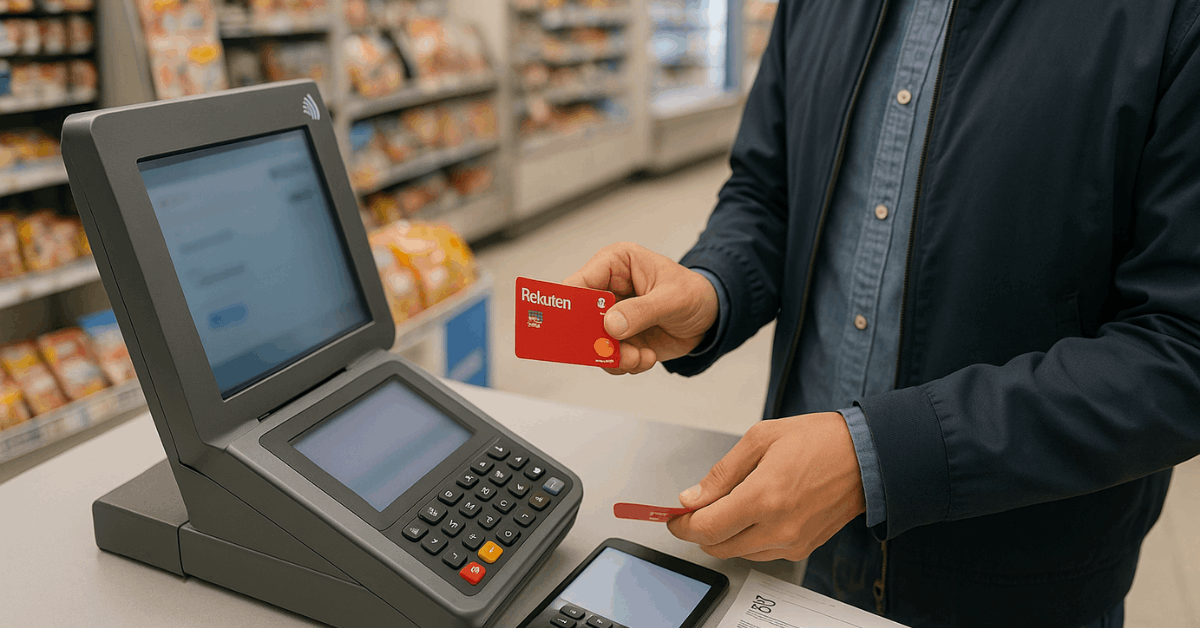
In practice, Rakuten confirms identity against valid government IDs at delivery or through document uploads. Accepted documents include a driver’s license, My Number card, Japanese passport, Residence Card, or Special Permanent Resident Certificate.
Delivery methods that require “addressee identification” will ask for one of these at hand-off. Under Rakuten’s billing rules, statement balances are withdrawn on the 27th of each month.
Revolving payment service (defined later) and installment options accrue interest; standard revolving interest is listed at 15.00% (APR), while cash advances typically carry higher APRs. Always verify the current rate shown in your account.
Rakuten Card Types and Core Benefits
Across consumer tiers, Rakuten markets a no-annual-fee basic card, the Rakuten Pink Card (customizable designs and women-oriented options), and the Rakuten Gold Card with two free domestic lounge visits per year and a free ETC add-on.
Rewards remain straightforward: base earning of 1 point per ¥100 on typical purchases, with exceptions for certain categories such as taxes or insurance.
For toll roads, the ETC card Japan add-on usually costs ¥550 per year, waived for certain premium tiers or high member ranks; billing aligns to the same 27th.
How the Application Works
Start by reading the issuer terms and confirming current campaign details on the official apply pages. Prepare one accepted ID and a Japanese mobile number for contact.
Steps to Complete the Rakuten Card Application
Clear, correct data improves approval odds and prevents avoidable callbacks. Keep bank details ready for instant account linking. Japanese address entry follows postal-code lookup, then building and room details.
- Create or sign in to a Rakuten ID: Existing members select the “楽天会員の方” path; non-members select “楽天会員でない方” then register.
- Choose brand and design: Visa, Mastercard, JCB, and American Express are offered; many applicants select Visa or Mastercard for broader international acceptance.
- Complete the Rakuten Card application form: Enter name in kanji / ひらがな / romaji exactly as on your ID; see limits below.
- Supply contact details and address: Enter a reachable Japanese phone number and an accurate postal-code-based address, including building and room.
- State household and residence details: Provide household size, residence type, length at address, and indicate any rent or housing loans.
- Enter employment and income: Select student, employed, pensioner, or not working; disclose annual income amounts as requested, and add spouse/household income if asked.
- Set card usage choices: Select shopping use, and only enable cashing if needed; pick a conservative cash advance limit to avoid slowdowns.
- Decide on the revolving payment service: Disable by default if budgeting monthly in full; revolving adds interest charges.
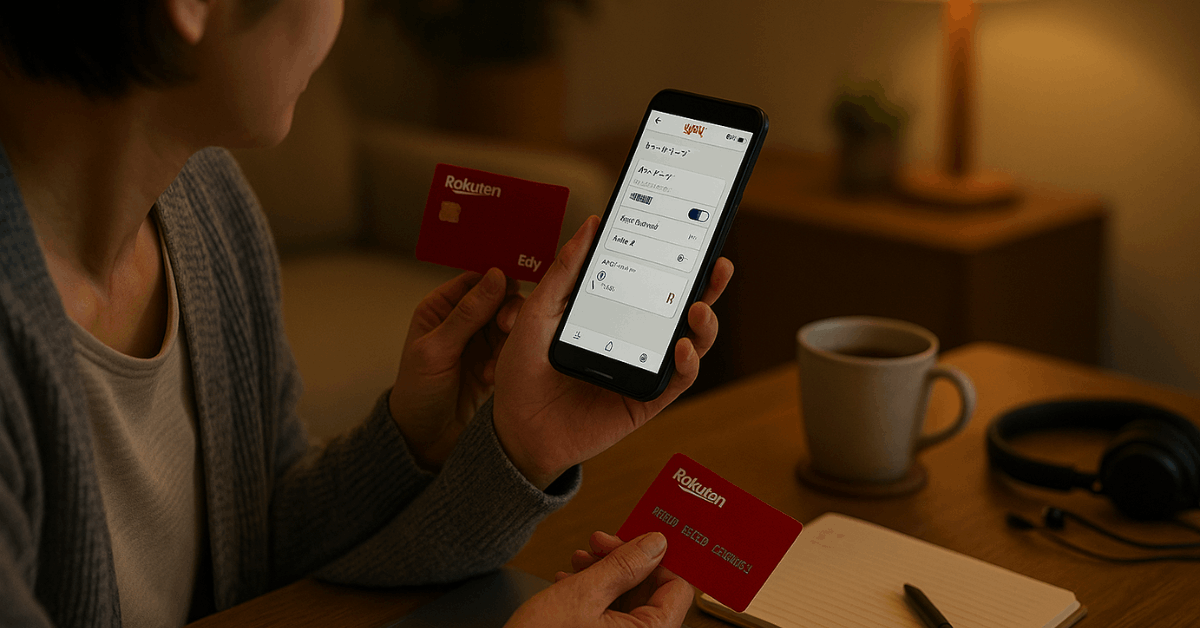
- Configure Rakuten Edy options: If desired, enable Rakuten Edy auto charge and set trigger balance, per-charge amount, and daily cap.
- Link a bank account: Instant online linkage speeds issuance; mailed linkage works but delays activation.
- Review and consent: Confirm every field and agree to the terms.
- Verification and delivery: Rakuten may place an identity verification call if clarification is needed; not every case receives a call. Card ships after approval, and delivery may require ID presentation.
Name Entry Rules and Character Limits
Accurate, policy-compliant name entry prevents reprints and delivery issues. Rakuten documents specify maximum characters for each field and brand.
Entry limits and notes:
| Field / Brand | Limit | Key notes |
| 漢字 (Kanji) – family & given | 10 each | Match ID exactly, order included. |
| ひらがな (Hiragana) – family & given | 15 each | Only one space permitted per field. |
| ローマ字 (Visa) | 19 | Printed on card; follow issuer format. |
| ローマ字 (Mastercard) | 21 | Character cap includes spaces. |
| ローマ字 (JCB) | 24 | Rakuten Bank co-branded: up to 19. |
| ローマ字 (American Express) | 21 | Character cap includes spaces. |
In e-commerce checkouts, the “cardholder name” field must be entered in half-width romaji exactly as embossed.
Smart Setup After Approval
After card arrival, enroll utilities and recurring bills for predictable points and cleaner cash flow. Base earnings remain 1 point per ¥100 at most merchants, while certain categories credit differently at ¥200 per point; check the current exceptions list before assuming 1%.
Under lounge rules, Rakuten Gold grants two free domestic visits per year (measurement window: September 1 to August 31), while Premium and Black unlock broader lounge access or Priority Pass. Keep the physical card and same-day boarding pass ready at entry.
For commuters, activating ETC links highway fees to the 27th withdrawal cycle; free ETC for premium tiers reduces ongoing costs.
Common Mistakes and How to Avoid Them
Brief context: Most rework stems from typos, address mismatches, and over-aggressive credit settings. Clean inputs reduce the chance of manual review or extra phone checks.
- Name mismatch across scripts: Keep kanji, hiragana, and romaji aligned to ID spelling and order.
- Over-claimed features at signup: Skip the revolving payment service unless required; interest accrues at listed rates.
- High cash advance limit: Conservative limits speed underwriting and reduce exposure.
- Incorrect address format: Provide complete building and room details; missing elements trigger callbacks.
- Unlinked bank account: Online linkage accelerates first billing and prevents mail-back delays.
FAQ: Foreign Residents and Students
For non-Japanese nationals, Residence Card details must match all name fields; acceptable IDs at delivery include a Residence Card and a passport, among others. Address paperwork and any upload requests should mirror those fields exactly.
For students, the application accepts “student” status and may ask whether income exists; reporting zero income is allowed, while household income and savings estimates still help frame limits. Revolving and cashing are optional features rather than requirements.
For identity contact, Rakuten may call only when application details need confirmation; many approvals proceed without a call. Treat unknown calls cautiously, yet expect short verification if there are address or phone discrepancies.
Compliance: Fees, Interest, and Payment Timing
Because YMYL details change, confirm rates inside your account prior to opting into financing features. The monthly payment date is the 27th, and missed withdrawals can trigger interest until cured.
The revolving payment service charges 15.00% APR as published on Rakuten’s revolving information page, while cash advances and special categories may differ by program.
For e-money, Rakuten Edy auto charge pulls funds based on your threshold and daily cap; set up lives in Rakuten e-NAVI and requires a brief activation step to take effect at supported merchants.
Conclusion
Across ID-matched name fields, conservative credit settings, and clean bank linkage, the Rakuten Credit Card Application runs quickly and produces reliable monthly billing on the 27th.
Reward mechanics remain simple at 1 point per ¥100, while optional add-ons, airport lounges via Gold and ETC linkage, unlock extra value for travelers and drivers.
Keep documentation consistent, avoid revolving unless planned, and treat any identity verification call as a brief check rather than a setback.